Featured

Lab 1 Report

Breadboards

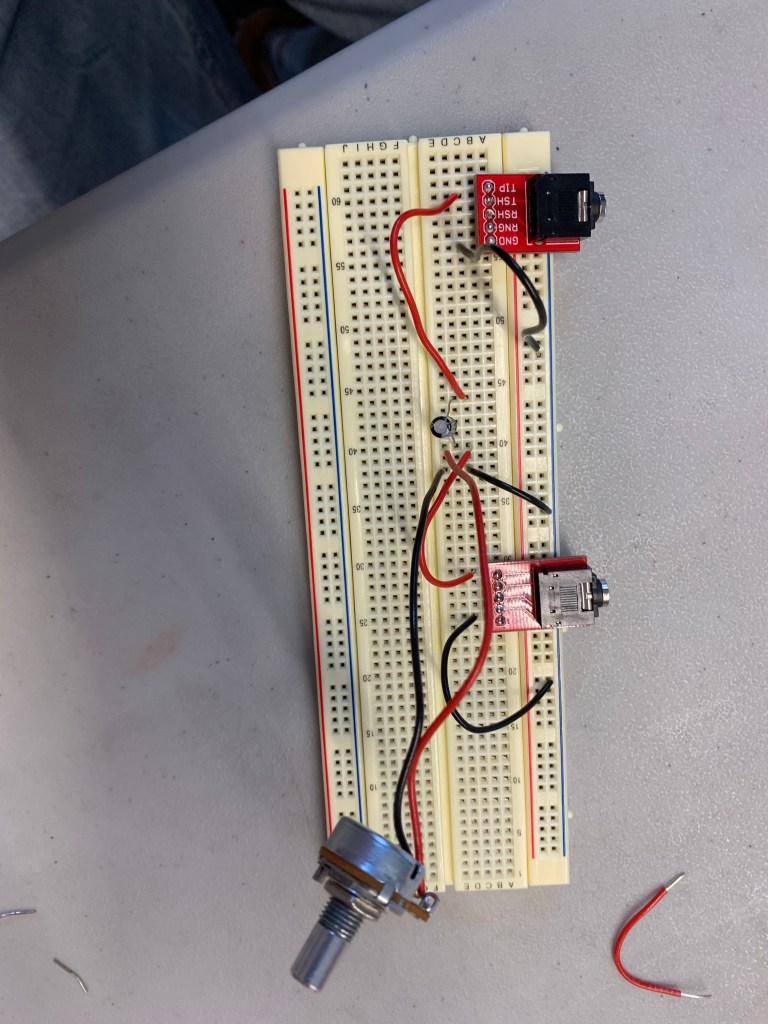
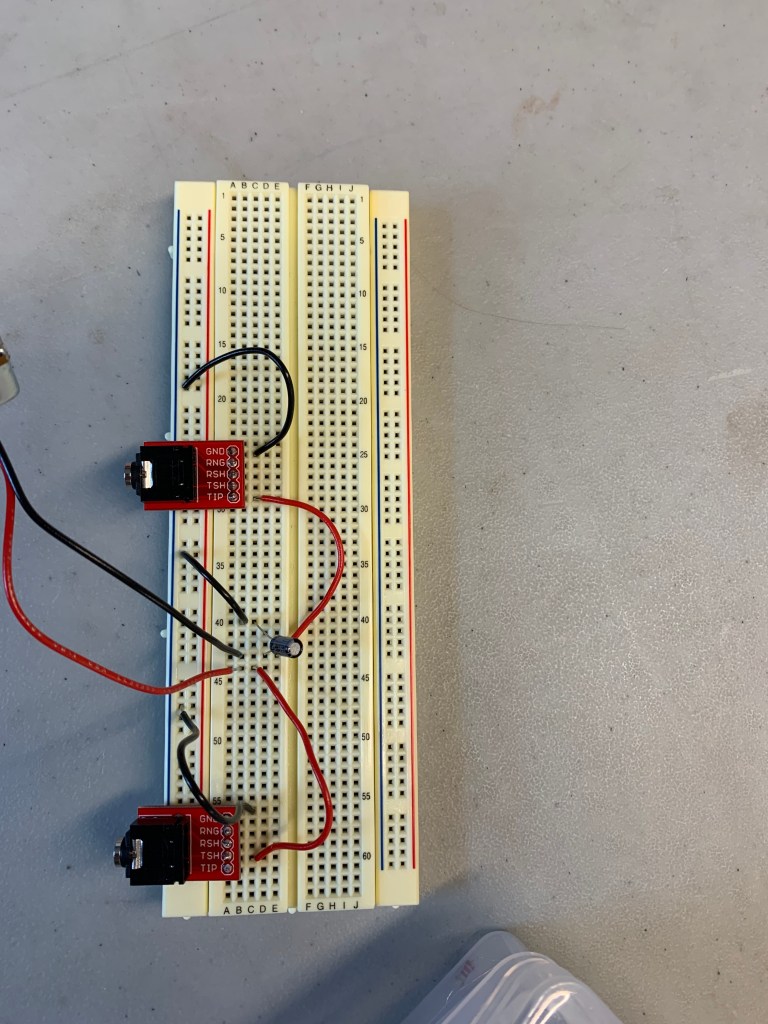
Breadboards have small metal clips under each hole which grab on to the copper wires that stick in to them. The metal clips are conductors which become charged when you connect a battery to the breadboard and the current flows through from positive to negative. However, the two halves have no connection to each other. You can use a breadboard to create a prototype design of a project. There is also a sticky back that allows you attach it to something.

Schematics
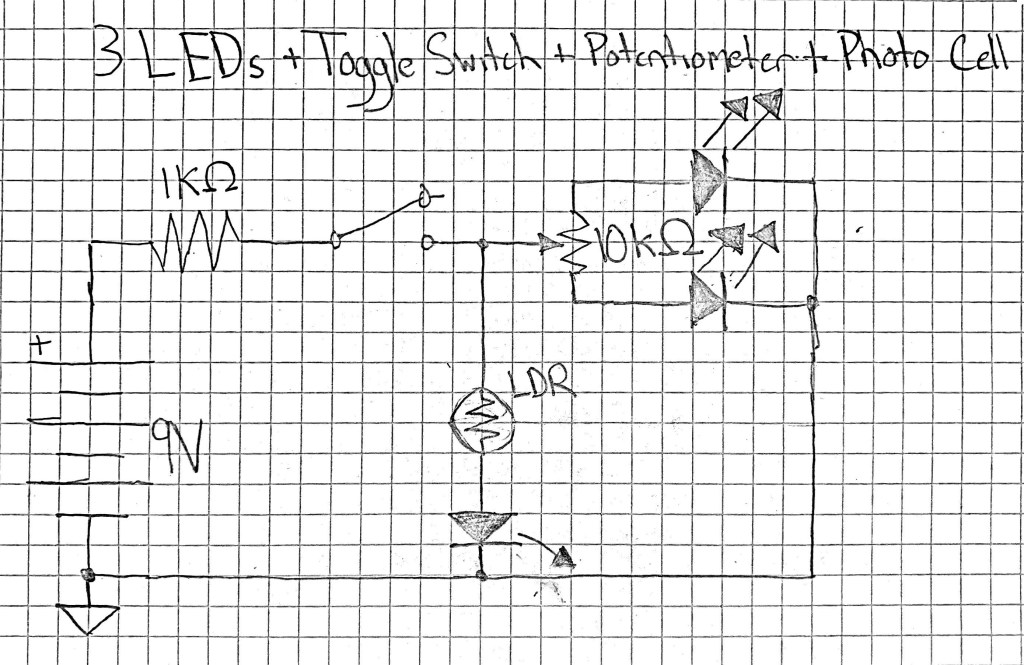
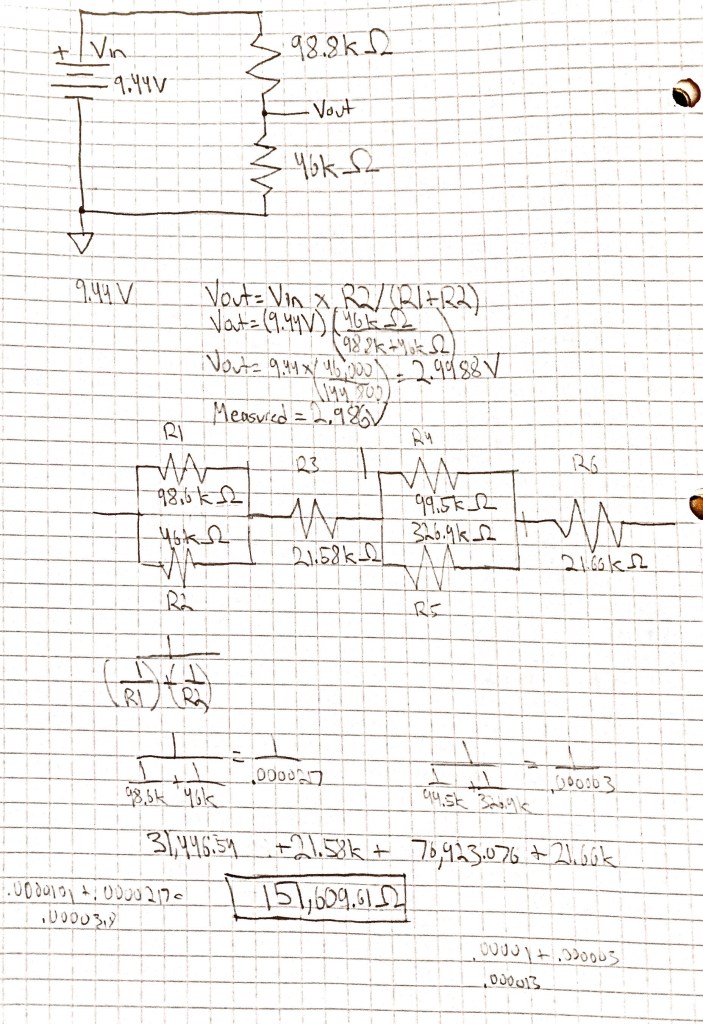
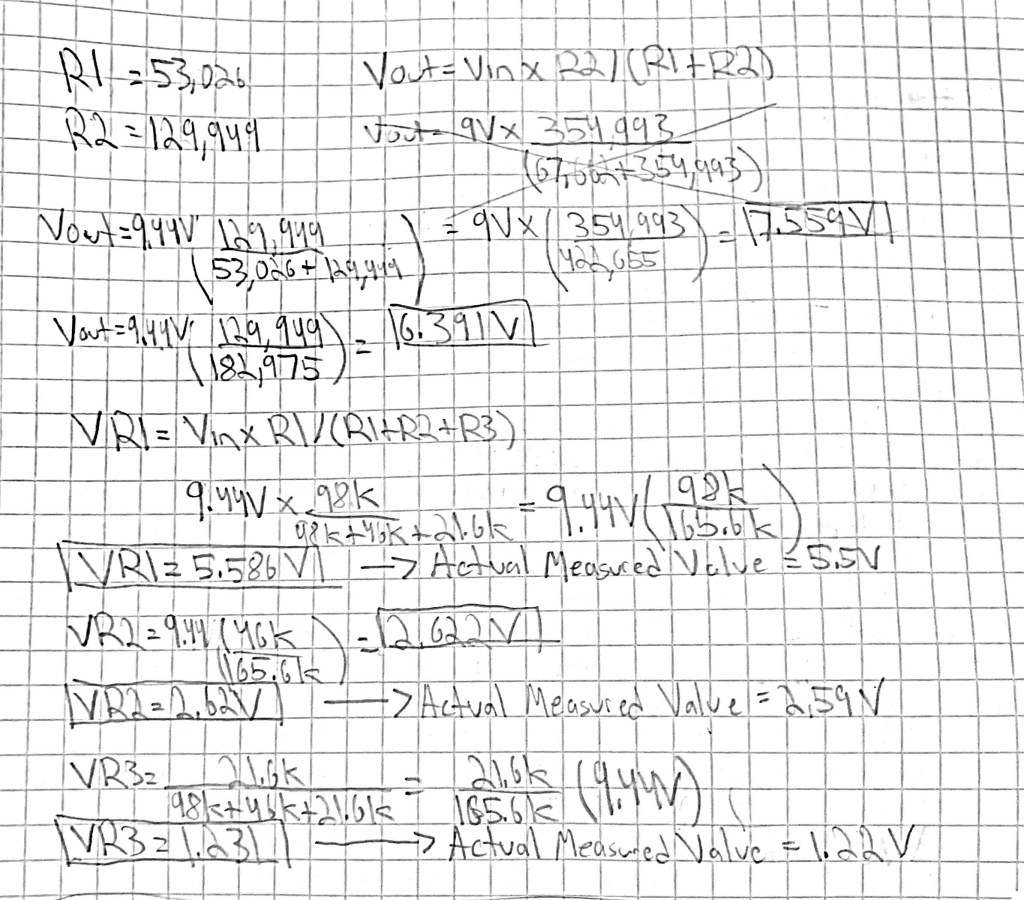
Multimeters

Multimeters are a tool that you can use to test the connectivity of a circuit. It can test the current, resistance, and voltage of a circuit. We used it to check the voltage of the batteries we were using. You can use it to troubleshoot your circuit, too. For example, by using the method of Nodal Analysis, you can check the voltage that each component of your circuit needs.

Final Project

Jacob Sandakly: The idea was very creative and there isn’t really anything else like it. It is also really cool how the microphone acts as mouthpiece and controls the volume of each breath

Connor Riley: I was actually very impressed with the quality of the distortion effect. It sounds like something I would actually want to use in one of my songs. It’s really cool how you can also control the low-pass filter with light or a knob.

Alexandra Dyan: The vibrato effect was super cool and made the synth sound 10 times better.

Lab 11

  1. Boss, Electro-harmonix, Himmerelstrutz Elektro Art

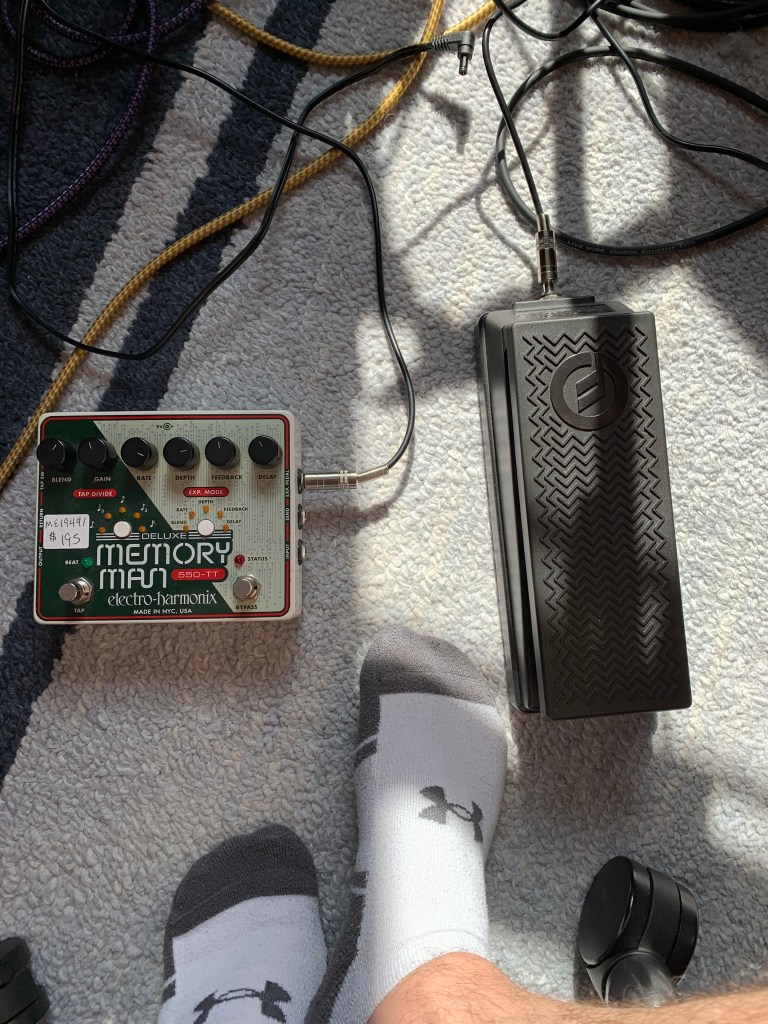
1a. I like the Mr Nutcracker tone enhacner pedal by the Sweedish brand Himmerelstrutz Elektro Art. I like how you can switch the mode between string attack and compressor character, and that you can adjust the bass and treble of the compressor. I also like the Memory Man Deluxe by Electro-Harmonix. Having owned one myself, I love how it can essentially serve as a delay as well as a chorus pedal when you make the delay really short. I don’t like the tap switch button.

1b. Differences between large and boutique manufacturers include the fact that boutique companies are usually designed and manufactured by hand, while large companies use machines.

1c. The memory-man deluxe is unique because of its ability to be controlled with an expression pedal. You can set the expression pedal to adjust wither the gain, feedback, depth, rate, and delay. What is unique about this that by using the expression pedal to control the feedback and delay in real time, you can create your own transitions using the feedback noises. You can also make some really weird sound effects by setting the expression pedal to the delay.

2) Momentary Switch

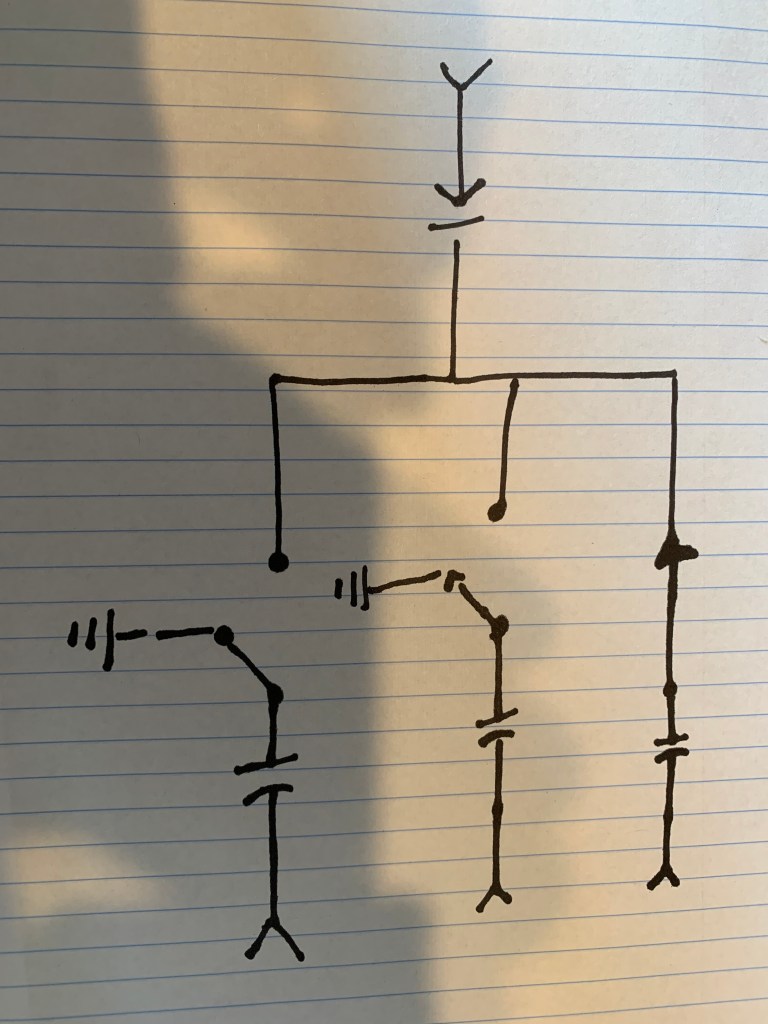
3) A momentary button will only engage a circuit as long as it is being held down, where a latching button will keep the circuit engaged until you press the button again.

Lab 8

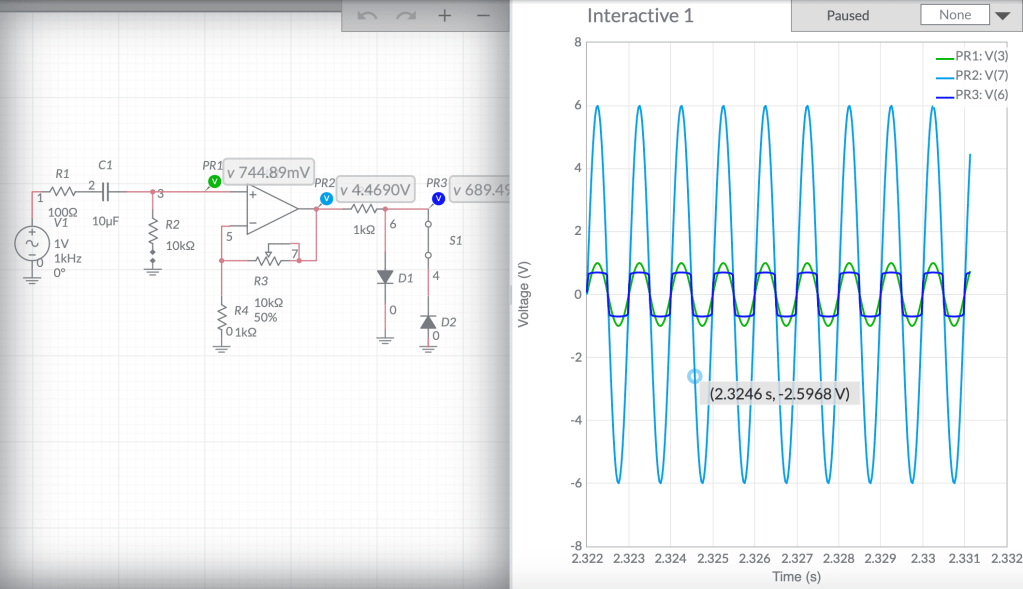
1) With the oscillator we’re studying the comparator outputs a Square wave and the integrator outputs a Triangle wave.

2) With an integrator, if Vin is positive the output voltage ramps Up . If Vin is negative the output voltage ramps Down.

Screen Shot 2020-03-23 at 10.22.06 AM

3) With a comparator, if the op amp’s + input is connected to a greater voltage that that connected to it’s – input, the op amp’s output will be about positive 9v DC.  If the op amp’s + input is connected to a lower voltage that that connected to it’s – input, the op amp’s output will be about negative 9v DC.

4) There’s a formula for how fast the integrator ramps up or down:

change in volts per second at Vout = -Vin / RC

So the bigger the resistance R you use the slower the ramp gets, and the bigger the capacitor gets the slower the ramp gets.

5) The circuit at the end of this video is a monophonic synthesizer – it can only output one tone at a time. What do you think would have to do to make a polyphonic synthesizer that could play 2 notes at the same time? 3 notes? 4 notes? 100 notes?

I think you have to build a separate comparator for each note you want which would allow separate waves to be controlled individually.

Lab 6

2a)

Fc=1/2(3.14)(R)(C)

R=10,000 ohms; C= 1uF

Fc=1/2(3.14)(10,000)(1)

Fc=15.92 Hz

R=10 ohms; C= 1uF

Fc=1/2(3.14)(10)(1)

Fc=15,915.49 Hz

2b) Low Pass Filter

2c)

1/2(3.14)(R)(C)

R=100,000 ohms; C=.01 uF

1/2(3.14)(100,000)(.01)

Fc= 159.25 Hz

R=1,000; C=.01 uF

1/2(3.14)(1000)(.01)

Fc= 15,915.49 Hz

2d)

Part 4)

To make a 12 db/octave or greater filter, simply increase the resistance of the potentiometer

Part 5)

a) I found it interesting that we can incorporate LED lights into our final projects. It would be cool to make a distortion pedal with an LED that gets brighter as the amount of distortion goes up.

b) I would love to make a distortion pedal that controls the amount of distortion through a photo cell, and combine it with an RC filter that is also controlled by a photo cell. To make it look cool, I could add LEDs controlled by photo cells.

c) My favorite guitar pedal is the Memory Man Deluxe delay pedal. I love how you can make it act as a chorus pedal by playing with the depth and rate, and it has an input with an expression pedal that can control the depth, rate, feedback, blend, and delay. The schematic is incredibly complex and I have no idea how to follow it.

Lab 5

I realized that the pictures I took in class were too shaky and only showed either the just input or just the output (for the inverting and non-inverting amplifiers). Instead I used the video of turning the potentiometer to show the input and output. When the potentiometer is at minimum resistance, it shows the output is twice the amplitude of the input.

Vout = Vin * (1 + R2/R1)

.2V=9V(1+R2/10,000)

2,000=9V(1+R2)

222.222=1+R2

R2=221.22–> 220 ohms

This video shows the potentiometer turning from minimum to maximum resistance. Since a potentiometer has a resistance of 10,000 ohms, the calculations are the same for the first video.

Vout = Vin * (1 + R2/R1)

.2V=9V(1+R2/10,000)

2,000=9V(1+R2)

222.222=1+R2

R2=221.22–> 220 ohms

Vout = -Vin*(Rf/Rin)

.2V=-9V(Rf/10,000)

-.022=Rf/10,000

-222.22=Rf–> -220 ohms

What we are seeing is different from the non-inverting amplifier because the inverting amplifier inverts the output to be a negative sine wave with a gain of 2 rather than a positive sine wave with a gain of 2.

Vout = -Vin*(Rf/Rin)

.2V=-9V(10,000/Rin)

-.022=(10,000/Rin)

-.022(Rin)=10,000

Rin= -454,545.455–> -470,000 ohms

Lab 4

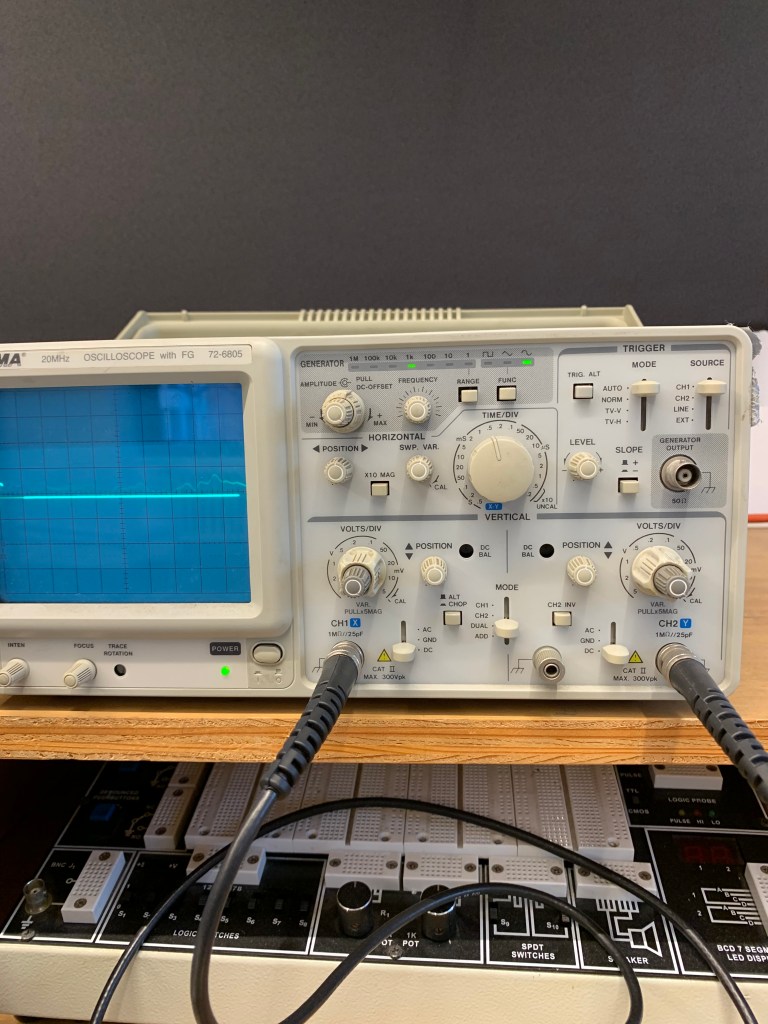
After turning on the oscilloscope, I set the two channels to Direct Current (DC) since we were dealing with a DC input. I made sure the x and y-xis were set to the middle so the sine wave we were looking at would be positioned in the center. The X-axis shows the time, and the Y-axis shows the voltage. Together, they show voltage in relation to time. I switched the mode to dual so we could see both channels and then use the potentiometer to fade between channels. When turning the potentiometer, we see the amplitude of one channel go down, while the amplitude the of the other channel increases. Turning the pot can show an output voltage of a minimum of 0% of the input voltage and a maximum of 100%. Then I set both of the Volts/Div knobs to .5V which determines the scale of the grid, meaning we would see half a volt for each little square on the screen. I turned the smaller Time/Div knobs all the way to the right until they clicked which allow you to fine tune the Volts/Div between the intervals on the big knob. I also set the Time/Div knob to .5 mS which means it takes half a mS for the wave to cross each division or square. Finally, I set the trigger mode to auto so that the threshold required for the signal to appear on the screen is 0. I connected the red probes to the positive side of the circuit and the black probes to ground.