Lab 1 Report

Breadboards

Breadboards have small metal clips under each hole which grab on to the copper wires that stick in to them. The metal clips are conductors which become charged when you connect a battery to the breadboard and the current flows through from positive to negative. However, the two halves have no connection to each other. You can use a breadboard to create a prototype design of a project. There is also a sticky back that allows you attach it to something.

Schematics
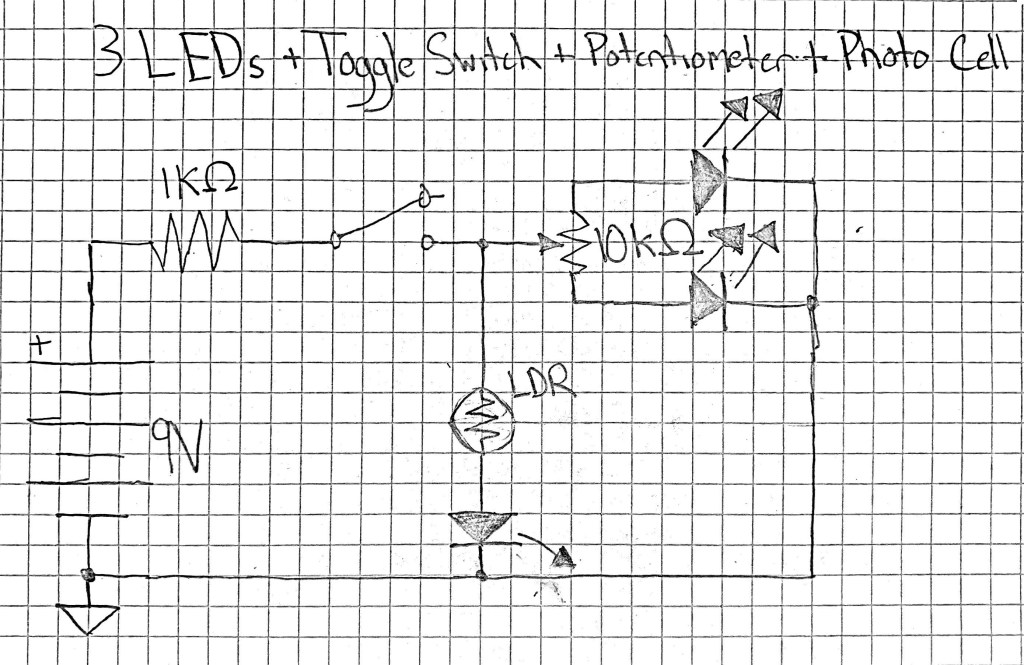
Multimeters

Multimeters are a tool that you can use to test the connectivity of a circuit. It can test the current, resistance, and voltage of a circuit. We used it to check the voltage of the batteries we were using. You can use it to troubleshoot your circuit, too. For example, by using the method of Nodal Analysis, you can check the voltage that each component of your circuit needs.

Final Project

Jacob Sandakly: The idea was very creative and there isn’t really anything else like it. It is also really cool how the microphone acts as mouthpiece and controls the volume of each breath

Connor Riley: I was actually very impressed with the quality of the distortion effect. It sounds like something I would actually want to use in one of my songs. It’s really cool how you can also control the low-pass filter with light or a knob.

Alexandra Dyan: The vibrato effect was super cool and made the synth sound 10 times better.

Introduce Yourself (Example Post)

This is an example post, originally published as part of Blogging University. Enroll in one of our ten programs, and start your blog right.

You’re going to publish a post today. Don’t worry about how your blog looks. Don’t worry if you haven’t given it a name yet, or you’re feeling overwhelmed. Just click the “New Post” button, and tell us why you’re here.

Why do this?

  • Because it gives new readers context. What are you about? Why should they read your blog?
  • Because it will help you focus you own ideas about your blog and what you’d like to do with it.

The post can be short or long, a personal intro to your life or a bloggy mission statement, a manifesto for the future or a simple outline of your the types of things you hope to publish.

To help you get started, here are a few questions:

  • Why are you blogging publicly, rather than keeping a personal journal?
  • What topics do you think you’ll write about?
  • Who would you love to connect with via your blog?
  • If you blog successfully throughout the next year, what would you hope to have accomplished?

You’re not locked into any of this; one of the wonderful things about blogs is how they constantly evolve as we learn, grow, and interact with one another — but it’s good to know where and why you started, and articulating your goals may just give you a few other post ideas.

Can’t think how to get started? Just write the first thing that pops into your head. Anne Lamott, author of a book on writing we love, says that you need to give yourself permission to write a “crappy first draft”. Anne makes a great point — just start writing, and worry about editing it later.

When you’re ready to publish, give your post three to five tags that describe your blog’s focus — writing, photography, fiction, parenting, food, cars, movies, sports, whatever. These tags will help others who care about your topics find you in the Reader. Make sure one of the tags is “zerotohero,” so other new bloggers can find you, too.